
CASE 01 · STONE SETTING
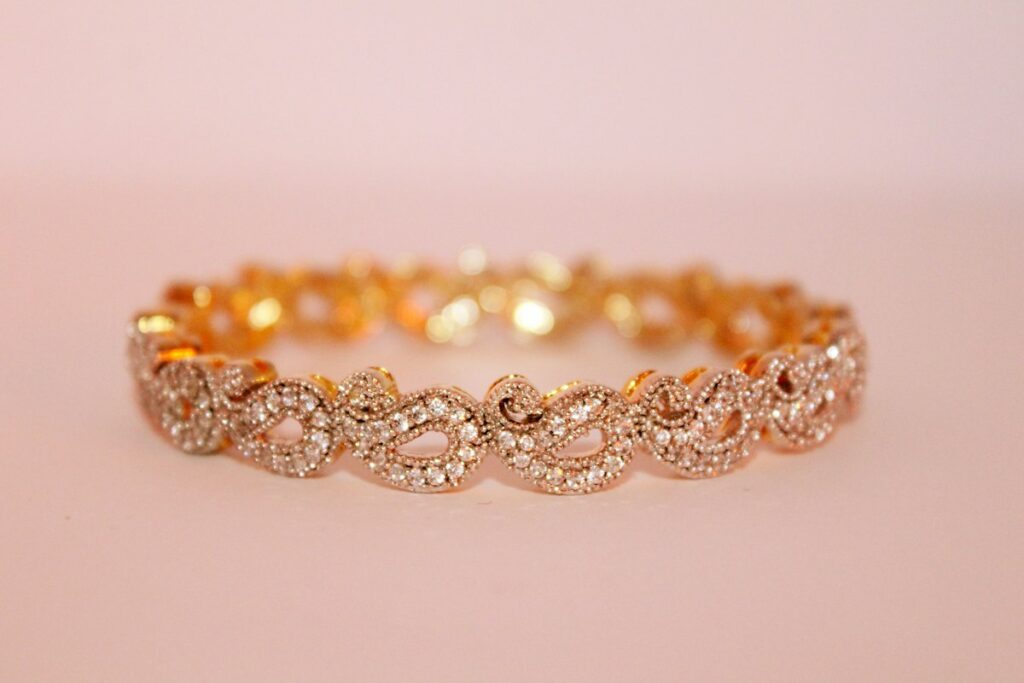
Pavé-Set Gold Bangle
A solid 18K yellow gold bangle prepared for a full pavé sweep — every seat drilled to a measured depth, every stone set by hand under the loupe.
Design Challenge
The design was a continuous pavé line around a solid bangle: no prong clusters, no gaps a pin can catch, and a grain height that reads identical all the way around. Two problems follow from that.
Seat depth has to be uniform across the full circle, or the line goes uneven under light. And a solid band takes setting pressure differently than an open one — it has to come off the bench as round as it went on.

Seat depth is checked per hole on the setting bench
Manufacturing Route
Band preparation
The solid 18K band is turned to size and filed to a uniform blank. Any low spot now becomes a low spot in the stone line later.
Seat drilling
Each seat is drilled on the bench to a gauged depth. Depth is checked per hole, not per batch — the gauge lives next to the drill, not in a drawer.
Hand setting
Stones go in one at a time with gravers. Beads are raised around each stone, pressure released, and the stone re-checked for line before the next one starts.
Line check
The bangle is rolled under a bench lamp. Any stone sitting proud of the line, or shy of it, is re-seated before the piece moves on.
Final finish
High polish by hand, no plating. The metal is finished along the setting line so no bead is shaved down in the process.
Finished Result
Ninety-six stones in one unbroken line. The band reads as a single surface of light rather than a row of stones, and the inside face is finished to the same standard as the outside — the part a client touches every day.
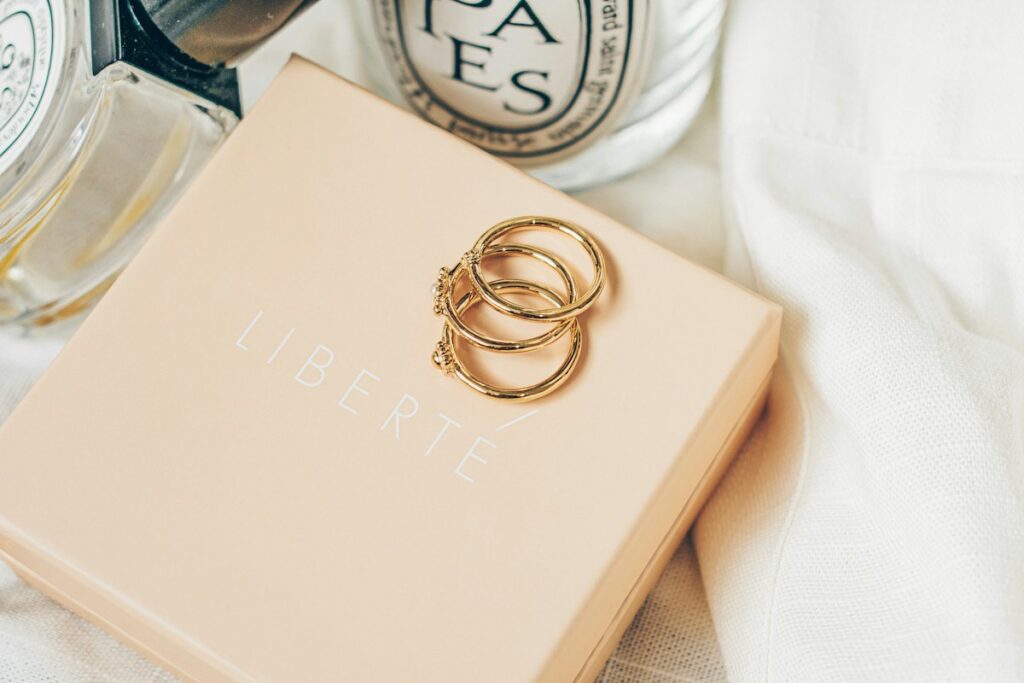
Finished pieces, checked and boxed
Where this piece was hardest
On a curved band, every seat sits at a different angle. Cut them from the flat view of the drawing and the row steps where the curve turns — each stone correct on its own, and the line still reads broken. The seat angle has to follow the surface that carries it, which is a bench decision rather than a drawing one.
The sequence matters more than the skill. Every heat operation belongs before the last stone goes in, because soldering near a set row moves the seats even when nothing visible changes. Finishing follows the same rule: the polish that removes metal happens before the stones are set, and only the local clean-up happens afterwards.
It is checked against the retained sample, not against memory: line continuity around the curve, stone height consistent across the row, and prong thickness measured after polishing rather than before. Those three checks are what separate a pavé line that reads as one line from a row of individually correct stones.
Buyer concerns we addressed
Pavé is read as a line, not as individual stones. The seats are cut in one continuous sequence so the depth stays consistent along the whole bangle, and the set line is reviewed as a line before setting begins.
Each stone is seated into its own cut seat and secured by beads raised from the surrounding metal. There is no adhesive in the joint, so security comes from the geometry of the seat rather than from glue.
A continuously set bangle is sized before setting, not after. If a size change is likely, it has to be decided at the order stage. That is the honest answer, and it costs less than resetting a finished piece.
Stones are matched across the set so they read consistently under the same light. Mixed sizes or tolerances show up as visible unevenness in a continuous line, so the matching happens before the first seat is cut.
What we would tell another buyer
If your design runs a continuous line of stones, the question to ask a workshop is not can you set this. Most can. It is how do you keep the line true: where the seats are cut, in what sequence, and how the set is checked. The setting is the visible part; the seat cutting is what decides whether the line reads as one line.
NEXT STEP
Have a design that needs this route?
Send us your sketch, CAD file or a reference piece. We will map the route it needs — the same walkthrough documented above.